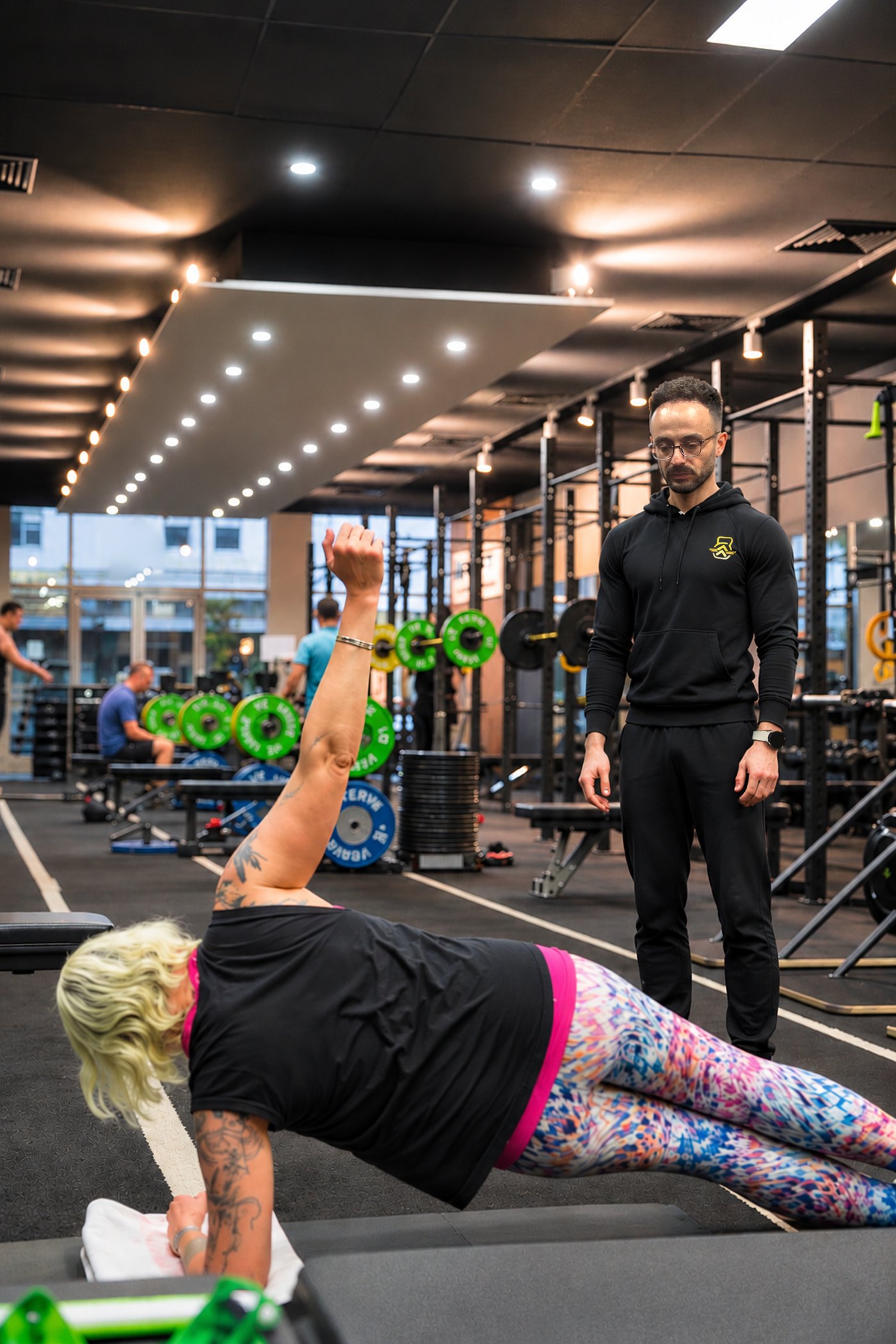
Cause before symptomsEvery program starts with an assessment
About your lower back
Where lower back pain starts
Hours of sitting
Hours at a desk or in the car keep your hips bent and weaken your glutes. When your glutes lose their strength, your lower back takes load it is not built to carry.
A core that does not stabilise
Your deep core muscles and your diaphragm work together to brace and stabilise your spine while your arms and legs move. When they do not do their job, your lower back moves where it should stay stable.
Load your lower back is not ready for
Lifting the kids, a long day on your feet or a hard session after a week of sitting asks your lower back for strength it has not built. Poor sleep and stress lower how much load it tolerates.
How we coach it
Addressing the cause,not the symptom
1
Find the causeThe Uplift Blueprint Assessment looks at how you move, sit, lift and breathe, and how your glutes and core engage, so we find the cause of your lower back pain before we load it further.
2
Activate,breathe and braceWe teach your glutes to activate, your diaphragm to drive your breathing and your core to brace, so your spine stays stable as you move and lift.
3
Strengthenthe core and glutesYour core, glutes and lower back get stronger together, with loads progressed as you are ready.
4
Support and accountabilitybetween sessionsWeekly or fortnightly check-ins through the Uplift app keep your habits and recovery on track.
A client story
Sona
Sona came to us with a long history of lower back pain. She trained with us consistently for more than four years. By the end she was deadlifting around 80 kg, and her lower back pain was completely gone.
Yes. Your training is fully customised to your lower back. We assess where it is today, then prescribe exercises that strengthen your weaknesses and address the cause of your lower back pain, not the symptom.
How does strength training help lower back pain?
Strong, active glutes and a braced, stable core protect your spine. When your glutes carry their share of the load and your core and diaphragm stabilise your spine, your lower back stops doing work it is not built for. That is how we help clients recover from lower back pain.
Why does breathing matter for my lower back?
Diaphragm breathing builds pressure inside your trunk that braces and stabilises your spine. We teach it first, then use it in every lift.
Will I have to stop deadlifting or squatting?
No. Your lifts are adapted to what your lower back tolerates today and built back up as your glutes and core get stronger.
How long before I notice a difference?
We review your progress regularly through the Uplift app, so you can see what is changing in your lifts, your movement and how your lower back feels.
This guide is general information, not medical advice.
All coaching takes place at our private studio on Bridge Road, Richmond, two to four times a week.
Discovery call
Book a 15-minute discovery call
Start with a 15-minute discovery call,so we can understand what you needand whether Upliftis the right fit for you.
15 minutes, by phone
We call you at the time you choose
Discovery call
Cannot find a time that suits you?
Leave your details and we will call you back.
Thank you. We have your details and will call you soon.