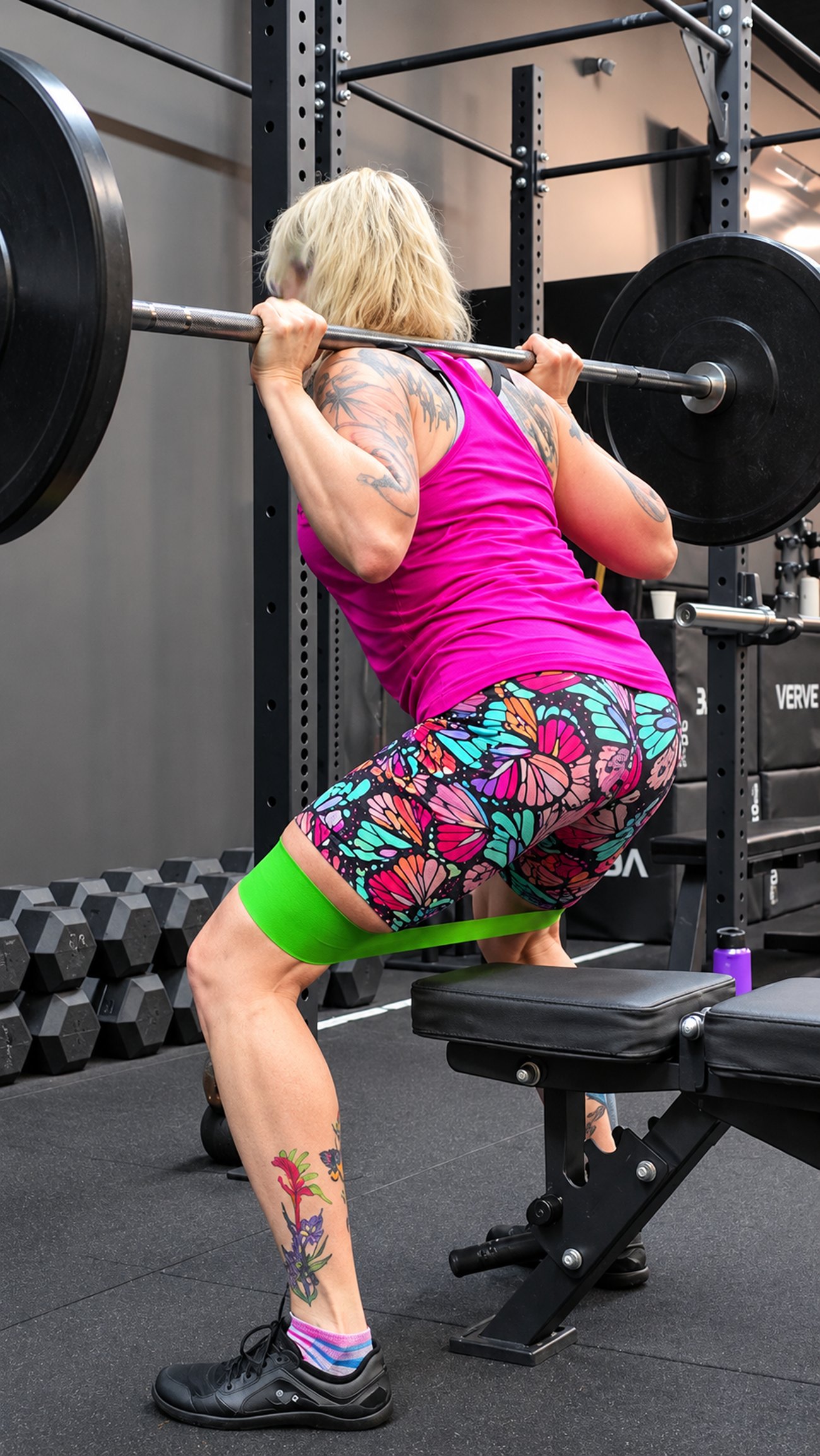
Knee-friendly progressionsRange and load matched to you
About your knees
Where knee pain starts
Narrow shoes
Narrow shoes and high heels squeeze your toes together and push your big toe inward. Over time the small muscles in the sole of your foot weaken, your arch drops and your knee caves inward as you squat, step and walk.
Weak feet and calves
Your calves push your toes down and pull them up towards your shin with every step. When your feet and calves are weak, your knee loses its base, and your glutes and hips have to work harder to hold it in line.
How your knee tracks
When your knee drifts inward, the kneecap and the joint take load unevenly. Your feet below it and your glutes and hips above it decide how your knee tracks.
How we coach it
Addressing the cause,not the symptom
1
Find the causeThe Uplift Blueprint Assessment looks at how your knee tracks as you squat, step and lunge, and at your feet, toes, ankles, calves and hips, so we find the cause of your knee pain before we load it further.
2
Strengthen the feet and calvesWe spread your toes, strengthen the sole of your foot and train your calves both ways, pushing your toes down and pulling them up towards your shin, so your knee has a strong base.
3
Control how your knee tracksYour glutes, quads and hips get stronger with your feet and calves, so your knee stays lined up over your foot as you squat, step and lift.
4
Support and accountabilitybetween sessionsWeekly or fortnightly check-ins through the Uplift app keep your habits, recovery and progress on track.
A client story
Anne-Marie
Anne-Marie has an executive job, spends long hours sitting and had been managing knee pain for years. Her assessment showed the cause was not her knee: very limited ankle mobility, which took months to improve, and weak glutes. We adjusted her squat and deadlift form and strengthened what was missing, and her knee pain is gone.
Yes. Your training is fully customised to your knee. We assess where it is today, then prescribe exercises that strengthen your weaknesses and address the cause of your knee pain, not the symptom.
Should I avoid squats with knee pain?
No. Squats are adapted to what your knee tolerates today, for example to a box or a shorter range, and built back up as your feet, calves, glutes and quads get stronger.
Do my shoes matter for my knees?
Yes. Narrow shoes and high heels squeeze your toes and weaken your feet, and lifting weights in soft running shoes puts your feet on a cushioned, unstable base. Shoes with a wide toe box and a flat, firm sole let your toes spread and your feet grip the floor, so your knees have a stable base.
I have an old knee injury. Can I still lift?
Yes. We assess how you move, then adjust your form and your stance and strengthen what supports your knee: your hips for stability, your ankles for mobility, and your calves and feet for strength. Your lifts are built back up as your knee responds.
How long before I notice a difference?
We review your progress regularly through the Uplift app, so you can see what is changing in your lifts, your movement and how your knee feels.
This guide is general information, not medical advice.
All coaching takes place at our private studio on Bridge Road, Richmond, two to four times a week.
Discovery call
Book a 15-minute discovery call
Start with a 15-minute discovery call,so we can understand what you needand whether Upliftis the right fit for you.
15 minutes, by phone
We call you at the time you choose
Discovery call
Cannot find a time that suits you?
Leave your details and we will call you back.
Thank you. We have your details and will call you soon.